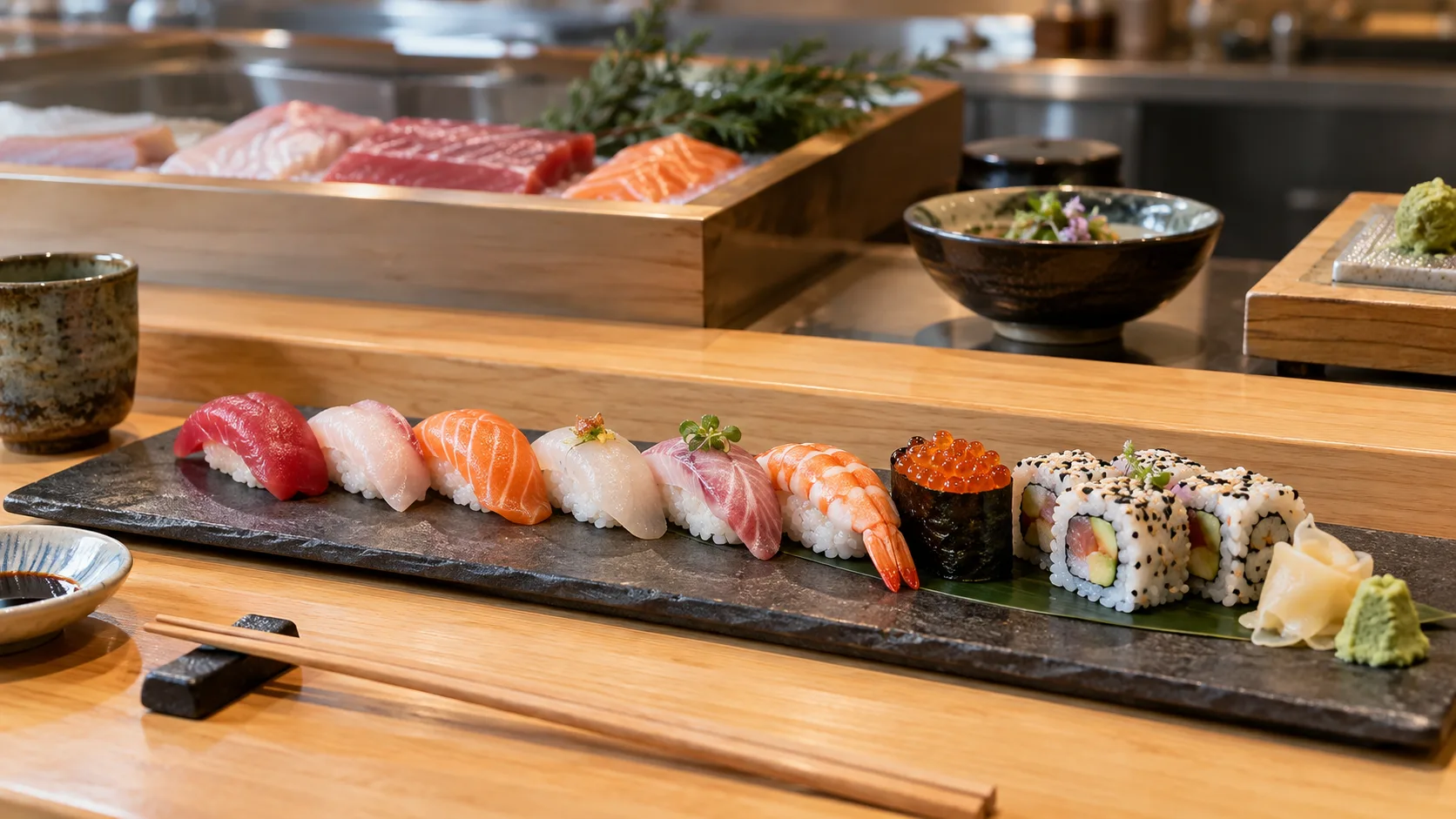
Not all sushi is raw
The most common misconception about sushi is that it is a synonym for raw fish. Sushi refers to the seasoned rice; what sits on or in it may be raw, cured, cooked or entirely vegetable. That distinction matters practically, because much of the advice about who should avoid raw seafood applies to part of the menu rather than the whole meal, and a diner who assumes otherwise usually orders worse than one who simply asks.
Once the terms are clear, the decisions get easier: how the formats differ, how to build a first order that covers a range of textures, and where the genuine safety questions sit — parasites and pathogens, mercury by species, and the allergens that hide in soy sauce, imitation crab and sesame. The sections below take those in turn.
Nigiri, maki, sashimi and a first order
Nigiri is a small hand-formed portion of seasoned rice topped with seafood or another ingredient. Maki is rolled with nori and cut into pieces; temaki is a hand roll; chirashi arranges toppings over rice. Sashimi is sliced seafood without the rice, so it is related to but not itself sushi in the literal rice-centered sense. Restaurant terminology varies, especially for elaborate house rolls. Asking what is raw, cooked, spicy, fried or sweetened is more reliable than assuming from a decorative menu name.
A beginner-friendly order can mix textures: one simple roll, a few pieces of nigiri and a cooked or vegetable item. Soy sauce is salty and should be used to taste rather than soaking the rice. Pickled ginger traditionally refreshes the palate between bites; wasabi adds heat. There is no need to perform an elaborate etiquette ritual in a casual restaurant. Eat pieces in a manageable way, use chopsticks or clean hands where appropriate, and focus on the food rather than policing another diner’s method.
Raw seafood risk and mercury by species
The FDA says cooking seafood thoroughly is the safest route. Previously freezing certain fish can kill parasites, but it does not destroy every harmful germ. Pregnant people, young children, older adults and people with weakened immune systems are at higher risk of severe foodborne illness and are advised to avoid raw or undercooked fish and shellfish. “Sushi-grade” is not a universal consumer guarantee under U.S. federal law. Ask the restaurant about sourcing and handling, but understand that no raw preparation is zero-risk.
Mercury exposure depends on species and frequency, not whether fish is served as sushi. FDA and EPA advice identifies lower-mercury choices and recommends that people who are or might become pregnant, breastfeeding parents and children eat appropriate portions from the “Best Choices” list while avoiding the highest-mercury species. Tuna names on menus can be ambiguous; ask which species is used. A varied order reduces reliance on one fish and can include salmon, shrimp, eel, egg and vegetables according to individual needs.
Allergens, freshness and delivery
Common allergens include fish, crustacean shellfish, soy, wheat, egg and sesame. Imitation crab often contains fish and may contain wheat, egg or other ingredients. Regular soy sauce usually contains wheat; a bottle labeled gluten-free does not solve cross-contact from shared prep areas or fryers. Tell staff the exact allergy before ordering and ask whether knives, boards, gloves, sauces and frying oil are shared. If the answer is uncertain, choose a simpler cooked dish or another restaurant.
Fresh seafood should smell mild rather than sour or ammonia-like and should remain properly chilled. Delivery adds time and temperature uncertainty, so receive it promptly and refrigerate leftovers quickly. Raw sushi is best eaten fresh; quality degrades as rice hardens and fish warms. Do not keep a takeout tray at room temperature through a long event. FDA guidance says perishable food generally should be refrigerated within two hours, or one hour in temperatures above 90 degrees Fahrenheit.
Reading a sushi menu
Menus signal a kitchen’s priorities. A counter listing a small number of fish by species, with a stated selection for the day, is making a claim about sourcing and turnover. A laminated menu of eighty rolls named after places and adjectives is making a different claim, usually about consistency and volume. Neither guarantees quality, but the first rewards asking what is good today and the second rarely does.
Price differences within a menu usually track species, cut and labor rather than markup. Fatty tuna, sea urchin and aged fish cost more because supply is limited; a heavily sauced roll costs less because rice, filler and sauce carry the volume. To judge an unfamiliar restaurant, order one simple piece of nigiri first — rice temperature, seasoning and the way the fish is cut are all visible in it — before committing to a large mixed order.