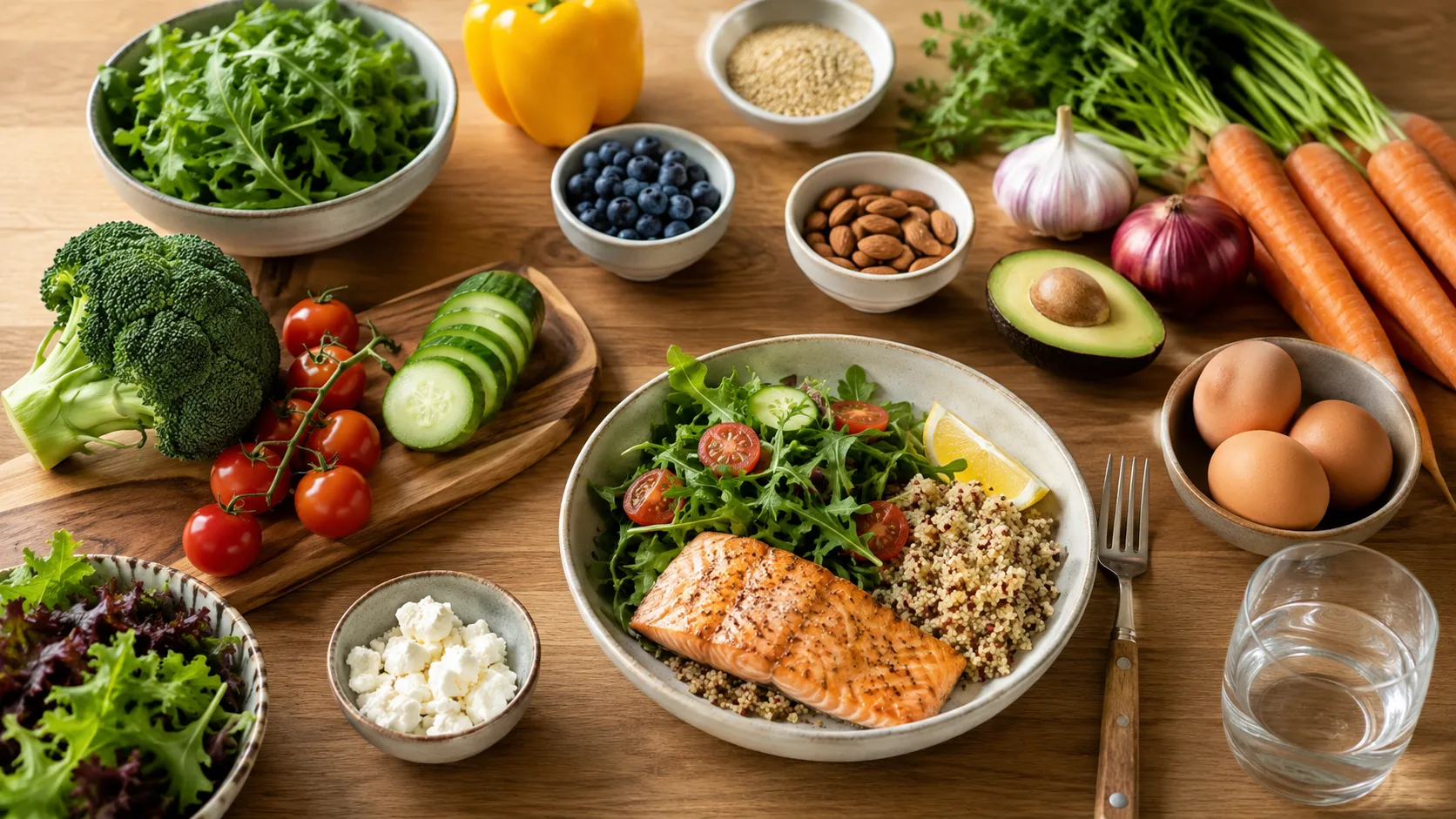
A framework beats a food list
Everyday eating decisions rarely fail because someone lacked a fact about a single ingredient. They fail because there is no repeatable structure — a plan for the week, a way to compare two packages on a shelf, a habit that keeps food out of the temperature range where bacteria multiply. A framework that survives a bad week is worth more than a rule that only works when everything goes as intended.
This guide takes three of those structures in turn: a plate model for composing meals without ranking foods as virtuous or forbidden, the parts of a Nutrition Facts panel that actually support a comparison, and the four handling steps that prevent most household foodborne illness. None of it requires equipment beyond a thermometer, and none of it depends on following a particular diet.
Composing a meal and comparing two packages
A durable meal framework is more helpful than labeling individual foods virtuous or forbidden. The federal MyPlate model suggests making roughly half the plate fruits and vegetables while including grains and protein, with dairy or a fortified alternative as appropriate. It is a visual planning aid, not a medical prescription. Culture, allergies, budget, appetite and access shape real plates. Over a week, variety matters more than whether every meal has perfect proportions. Frozen and canned produce can be practical choices; compare added sodium, syrup and serving information when selecting them.
The Nutrition Facts label allows like-for-like comparisons when serving sizes are checked first. Calories and nutrients are stated per serving, and a package may contain more than one. Percent Daily Value is a general reference based on a daily diet, not an individualized target. Ingredients appear by weight, from most to least at formulation. For packaged foods, compare products serving-for-serving, focusing on the nutrients relevant to your goal rather than a marketing phrase on the front. People managing a medical condition should use guidance from a qualified clinician.
Added sugars, sodium and the four safety steps
Added sugars are listed separately from total sugars because naturally occurring sugars in fruit and milk are counted in the total. Sodium can accumulate across breads, sauces, prepared meals and snacks even when nothing tastes intensely salty. Fiber appears under total carbohydrate and is often higher in beans, lentils, vegetables, fruit and whole grains. No single number defines quality. A satisfying meal also needs enough food, enjoyable flavor and a pattern someone can sustain, rather than a collection of products optimized for one label claim.
Food safety begins with four recurring actions: clean hands and surfaces, separate raw animal products from ready-to-eat foods, cook to a verified safe temperature and chill promptly. A thermometer is more reliable than color for meat, poultry, seafood and egg dishes. Refrigerator temperature should be 40 degrees Fahrenheit or below. Perishable food generally should not remain at room temperature longer than two hours, or one hour in heat above 90 degrees. These practices matter most for children, older adults, pregnant people and anyone with a weakened immune system.
Date labels, storage and shopping to a plan
“Best if used by” usually describes quality, while certain infant-formula dates have regulatory significance; wording and rules can differ by product and jurisdiction. Do not rely on a calendar alone when packaging is swollen, leaking, damaged or recalled. The FDA and USDA publish recall notices with product identifiers, lot codes and distribution details. Match those details rather than discarding every vaguely similar item. If a product is recalled, follow the notice for return or disposal and clean surfaces it may have contacted.
Budget planning works best from meals outward. Check what must be used, choose several flexible dishes, then make a list organized by the store. Beans, eggs, grains, seasonal produce and frozen vegetables can stretch a plan, while one sauce or batch-cooked component can link meals without making them identical. Store food where it remains visible, label leftovers with a date and freeze portions unlikely to be eaten soon. Reducing waste saves money without demanding a restrictive menu.
Making the plan survive a bad week
A plan collapses at its point of highest friction, which is usually a weekday evening with nothing prepared in the house. The counter is to keep two or three fixed anchors — a cooked grain, a protein, something roasted — that combine several ways rather than committing every ingredient to a specific recipe. Batch what tolerates reheating and leave fast-cooking elements for the day itself; vegetables in particular lose more to a second heating than beans or grains do.
Waste is where a food budget quietly leaks. Store the shortest-lived items at eye level rather than at the back, freeze in portions the household will actually use rather than in one block, and keep a short list of dishes designed to absorb whatever is left — a soup, a frittata, a fried rice. Buying less more often beats buying more and discarding it, and the saving shows up faster than any change in which brand goes into the cart.