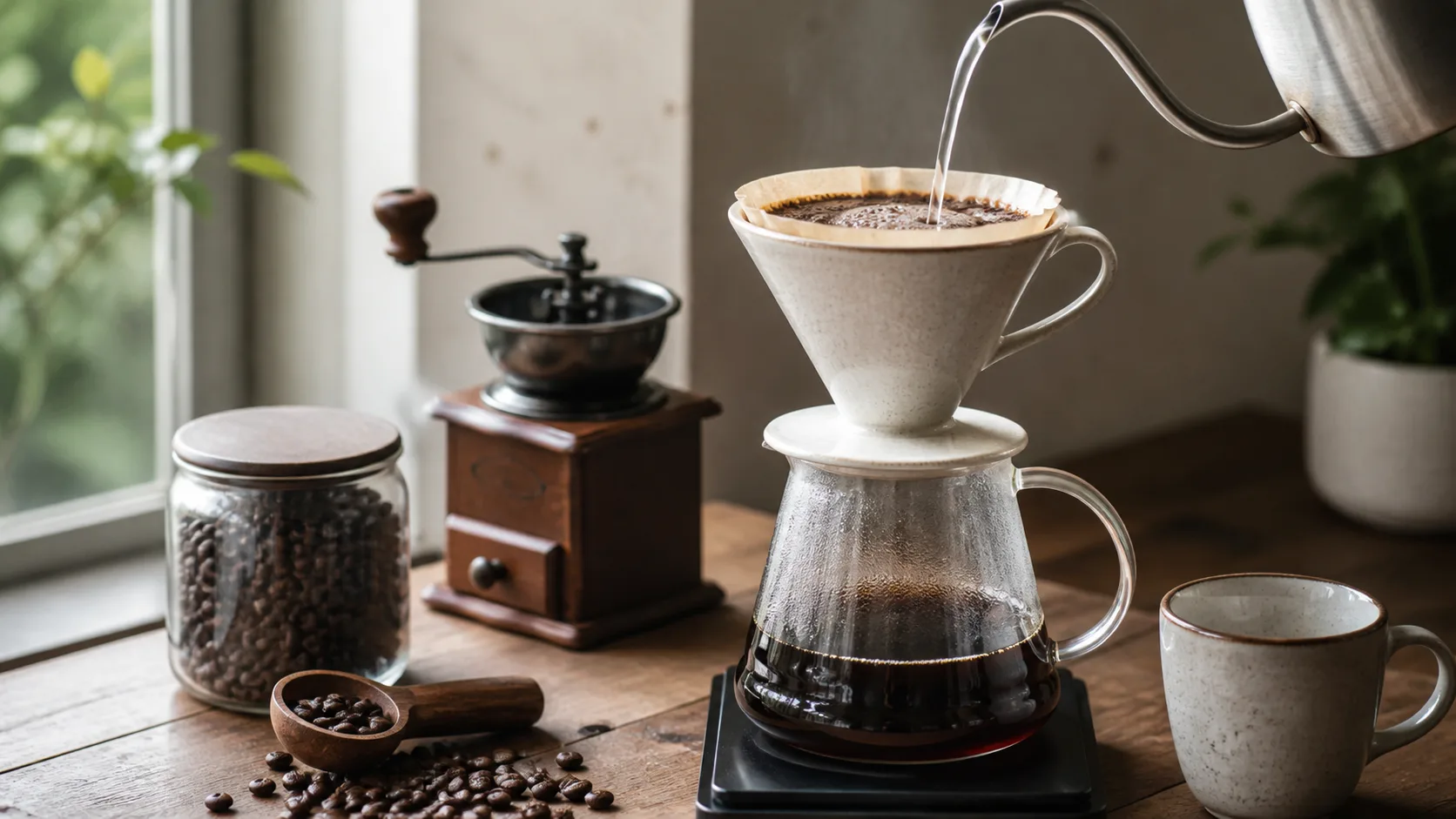
Fix the variables in order
Home coffee improves fastest when the variables are addressed in order of how much they change the cup. Ratio and grind come first, water and temperature second, equipment a distant third. This is the reverse of how most people approach it, which is why an expensive brewer often sits beside stale beans and a scale that never leaves the drawer.
A scale and a repeatable dose are worth more than new hardware, because they turn a vague result into a diagnosis: a cup that tastes sour or thin has usually stopped short, one that tastes harsh and drying has usually gone too far, and both are adjustable once you know what you actually poured. The sections below cover ratio and grind, the role of water and roast level, and what caffeine content and freshness really depend on.
Ratio, grind and what each one controls
A useful starting ratio for many filter methods is about 60 grams of coffee per liter of water, or roughly one part coffee to sixteen or seventeen parts water by weight. It is a starting point, not a law. Too weak can mean too little coffee or water moving through too quickly; harshness can come from over-extraction, excessive temperature or a roast profile you simply dislike. Measuring creates a baseline. Once the brew is repeatable, change the grind slightly before buying new equipment.
Grind controls surface area and flow. Espresso needs a fine, carefully adjusted grind because water contacts coffee briefly under pressure. Pour-over usually uses a medium range; French press is coarser because grounds steep for minutes. Burr grinders tend to create a more consistent distribution than blade grinders. Freshness does not mean beans must be used immediately after roasting: carbon dioxide can make very fresh coffee difficult to brew. Keep notes on roast date, dose, grind setting, water and time rather than relying on memory.
Water, temperature and reading a roast label
Water is most of the beverage. Extremely hard water can mute acidity and create scale, while distilled water lacks minerals that help extraction and may taste flat. Clean, pleasant drinking water is a reasonable starting point. Many filter brews perform well below a full boil, though darker roasts may taste better with cooler water. Preheat the brewer and rinse paper filters when appropriate. If a recipe tastes good, consistency matters more than chasing an exact internet temperature that ignores the brewer, altitude and roast.
Roast labels describe development, not caffeine strength or objective quality. Light roasts often emphasize acidity and origin character; dark roasts emphasize roast flavors and can be easier to extract. By scoop, density differences can affect caffeine, but by equal weight the contrast is modest compared with bean species, dose and beverage size. Espresso tastes concentrated yet a large brewed coffee may contain more total caffeine. Check serving size before comparing menu numbers or packaged claims.
Caffeine limits and keeping beans fresh
The FDA says up to 400 milligrams of caffeine a day is not generally associated with negative effects for most healthy adults, while sensitivity varies and pregnancy guidance is different. Caffeine can affect sleep long after the cup feels finished. Energy drinks, tea, chocolate and some medicines also contribute. Palpitations, anxiety, stomach symptoms or persistent insomnia are reasons to reduce intake and discuss concerns with a clinician. “Natural” does not make a stimulant dose irrelevant.
Store whole beans airtight, away from heat, moisture, light and strong odors. A clear hopper beside a sunny window is convenient but poor long-term storage. Buy an amount you can finish while it tastes lively, keep the daily portion accessible and leave the rest sealed. Freezing can preserve beans when portions are airtight and protected from condensation; repeatedly opening a large frozen bag is less effective. Brewed coffee should not sit on a hot plate for hours, which drives off aroma and develops bitter flavors.
Diagnosing a disappointing cup
Taste tells you which variable moved. A brew that finishes sour, salty or hollow has usually under-extracted: grind finer, raise the water temperature, extend contact time or increase the dose. A brew that is bitter, drying or flat has usually over-extracted: grind coarser, shorten the brew, or drop the temperature slightly. Change one thing at a time and write it down, because two simultaneous adjustments make the result uninterpretable.
Inconsistency is usually mechanical rather than mysterious. An uneven pour channels water through one part of the bed and leaves the rest untouched. A blade grinder produces dust and boulders that over- and under-extract in the same cup. A brewer that is never descaled runs cooler than its display claims. Of all the possible purchases, a burr grinder changes the most cups, and it does so at every brew method rather than one.