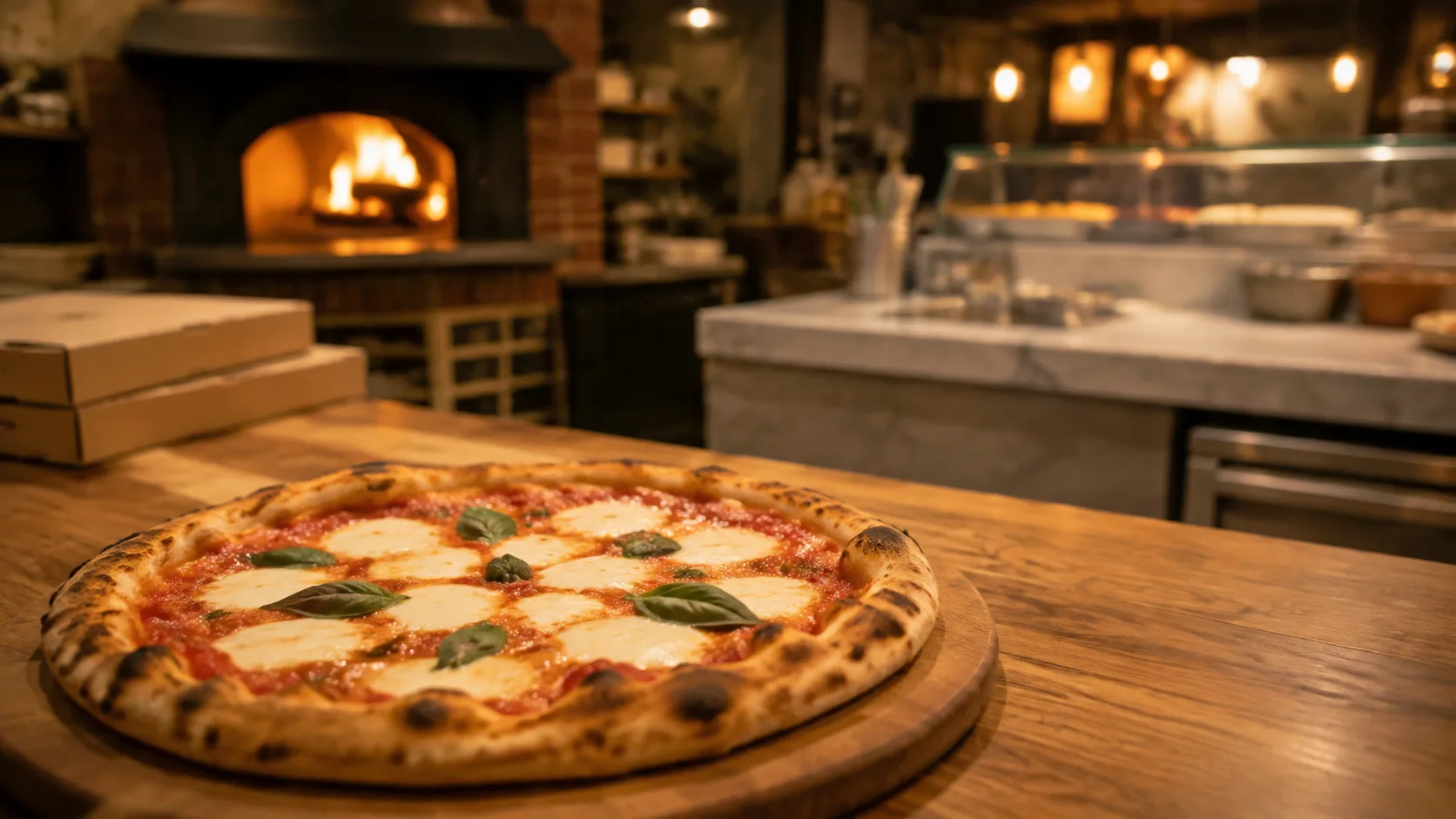
Crust decides more than toppings
Most pizza disagreements are really disagreements about structure. Hydration, fermentation time, oven temperature and whether the dough bakes on a stone or in an oiled pan set the texture before a single topping is chosen. A soft, quickly baked center, a wide foldable slice, an airy oil-crisped edge and a tall buttery wall are four different products that happen to share a name. Deciding which one you want narrows a menu faster than reading down the topping list, and it explains why a shop that excels at one style is often indifferent at another.
The second decision is context. A pizza eaten fifteen feet from the oven and a pizza that spends twenty-five minutes in a cardboard box are not the same food, and an order that suits one can disappoint in the other. Group size, dietary needs at the table and what you intend to do with the leftovers all belong in the decision before you call. The sections below work through the major styles, the allergen and nutrition questions worth asking, and the handling that keeps the second meal worth eating.
How the major styles differ
A Neapolitan-style pizza is typically small, quickly baked and soft through the center, while New York-style slices are larger and structured for folding. Detroit-style pizza uses a rectangular pan and an airy, oil-crisped edge; Chicago deep dish places a tall, buttery crust around a layered filling. These labels are useful expectations, not universal laws. Independent shops adapt hydration, fermentation, flour and ovens to local conditions, so photographs and a concise menu description often tell diners more than the style name alone.
For delivery, restraint usually travels better. Very wet vegetables, delicate greens and a mountain of toppings release steam inside the box and can soften the base. Asking for finishing ingredients on the side can preserve texture. If several people are sharing, choose one broadly appealing pizza and one that handles dietary preferences rather than trying to make every half-inch different. Confirm whether the quoted diameter is personal or shareable, because surface area rises quickly as the diameter increases and menu labels such as medium are not standardized.
Allergens, sodium and honest nutrition
Food allergies require a direct conversation with the restaurant. Pizza commonly includes wheat and milk, while pesto may contain tree nuts and some meat substitutes or sauces contain soy or sesame. A gluten-free crust does not guarantee protection from cross-contact in a flour-heavy kitchen or shared oven. The FDA identifies nine major allergens in packaged-food labeling, but restaurant practices vary. People with serious allergies should explain the allergen clearly, ask about preparation surfaces and utensils, and choose another meal if staff cannot answer confidently.
Nutrition depends on the whole order, not whether pizza is categorically good or bad. Crust thickness, cheese quantity, cured meats, dips and portion size can change sodium and calories substantially. Vegetables can add variety and fiber, but they do not erase the rest of the meal. Chain restaurants covered by federal menu-labeling rules provide calorie information; local restaurants may not. A balanced approach is to order the style you actually want, add a salad or vegetable when useful, eat attentively and save extra slices instead of treating the box as a serving.
Leftovers, reheating and food safety
USDA guidance says perishable leftovers should generally be refrigerated within two hours, or within one hour when the temperature is above 90 degrees Fahrenheit. Store slices covered in a shallow container rather than leaving the box on the counter overnight. Refrigerated leftovers are generally used within three to four days. These safety limits concern time and temperature, not smell: harmful bacteria do not reliably announce themselves. When the storage history is uncertain, discarding the food is safer than tasting it to decide.
For crisp reheating, a covered skillet over moderate heat works well: warm the base first, then add a few drops of water beside—not on—the slice and cover briefly so the cheese heats with steam. An oven or toaster oven is better for several pieces. USDA advises reheating leftovers to 165 degrees Fahrenheit. A microwave is fastest but softens crust; placing pieces in a single layer and using short intervals improves the result. Reheat only the amount you expect to eat so the remainder stays cold.
Judging a shop before you order
A menu tells you more about a kitchen than a rating does. A short list built around one style usually signals an oven and a dough schedule built for it; a menu spanning Neapolitan, deep dish, wings, subs and pasta signals a kitchen optimized for breadth. Neither is wrong, but the first is the better bet when you want a specific style executed well. Shops that care about dough tend to say so — fermentation time, flour, oven type — and a shop selling by the slice needs a dough that survives reheating, which is its own kind of signal.
Value is easier to judge by area than by label. Diameter is squared, so a 16-inch pizza carries roughly 78 percent more surface than a 12-inch, which usually makes the larger size cheaper per serving even when the price looks steep. Compare that against what the table will actually finish, since a discounted pizza that ends up in the bin is not a saving. Where a shop offers take-and-bake or par-baked pizzas, they are worth considering when the drive home is long: finishing the bake in your own oven avoids the trapped steam that softens a delivered crust.