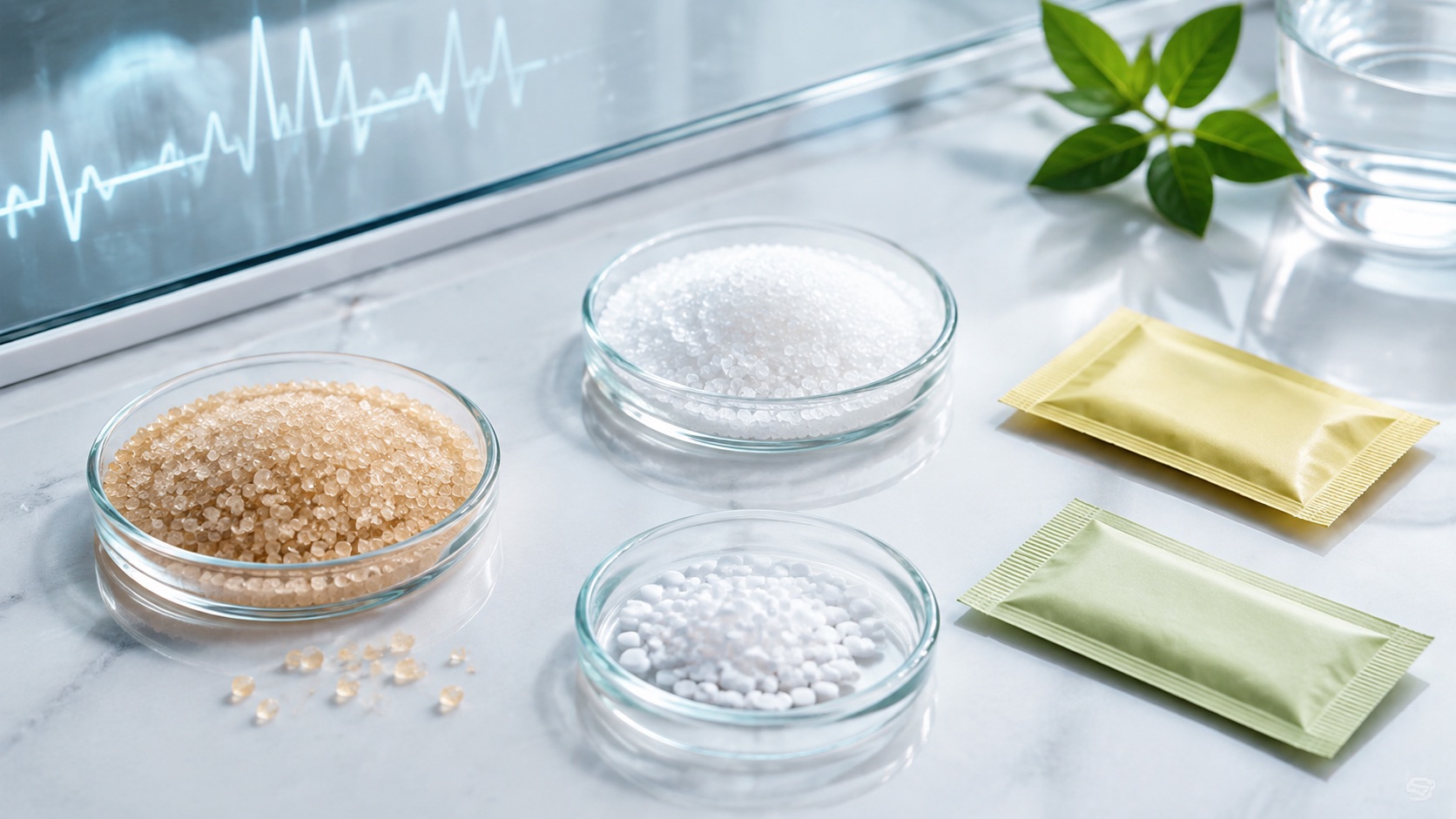
First, the ingredients are not interchangeable
Table sugar is sucrose, a carbohydrate that provides about four calories per gram and raises blood glucose. Xylitol is a sugar alcohol, or polyol, that tastes sweet with fewer calories and is common in sugar-free gum, candy and oral-care products. Splenda Original is based on sucralose, a high-intensity sweetener roughly 600 times sweeter than sugar; packets usually contain small amounts of bulking ingredients. Truvia is a brand family, and its tabletop products commonly use stevia-derived sweeteners with a bulking ingredient such as erythritol.
That means “Splenda versus Truvia” is not simply artificial versus natural, and a brand name does not describe every formulation. Read the ingredient panel. Baking blends, liquid drops and individual packets can differ. A person avoiding a particular sugar alcohol may tolerate a pure stevia drop but not a tabletop blend whose first ingredient is erythritol.
What the xylitol cardiovascular study found
A 2024 Cleveland Clinic-led study published in the European Heart Journal linked higher circulating xylitol levels with a greater three-year risk of major cardiovascular events among more than 3,000 patients in U.S. and European cohorts. In a small intervention, consuming a xylitol-sweetened drink briefly raised blood levels and measures of platelet reactivity. Laboratory work also supported a possible clotting mechanism.
The finding deserves attention, especially for people already at high cardiovascular risk. It does not prove that xylitol consumption caused every event in the observational cohorts. The body can produce xylitol, participants were not randomly assigned to long-term diets, and a blood level can reflect metabolism as well as food exposure. The intervention was small and measured short-term biological changes, not heart attacks caused by a specific product. Larger outcome trials and better intake data are needed.
Should you throw away xylitol toothpaste?
No. Even the study’s lead investigator emphasized that the result did not mean people should discard xylitol toothpaste. Swallowing a concentrated sweetened drink is different from brushing and spitting. Xylitol gum and oral products have been used to reduce cavity-promoting conditions, although benefits depend on the product and routine. The relevant unanswered question is the effect of regularly eating high doses in foods marketed as keto, low-sugar or diabetic-friendly.
People with cardiovascular disease, clotting concerns or multiple risk factors can bring ingredient labels and typical quantities to a clinician or registered dietitian. Also remember that xylitol is highly toxic to dogs; even small amounts can cause dangerous hypoglycemia and liver injury. Store gum, baked goods and sweetener containers securely away from pets.
Splenda side effects and health risk
The U.S. Food and Drug Administration approved sucralose for general food use after reviewing more than 110 studies, and it sets an acceptable daily intake of 5 milligrams per kilogram of body weight per day. Approval means the agency considers the additive safe under specified conditions; it does not mean every person benefits from consuming more of it. Some people report digestive symptoms from a product’s bulking ingredients rather than sucralose itself.
The World Health Organization recommends against using non-sugar sweeteners as a long-term strategy for weight control in the general population. That conditional guidance addresses long-term health outcomes and does not replace toxicology-based safety limits. It also does not apply in the same way to sugar alcohols such as xylitol. A regulatory safety question—“Is this exposure within an accepted limit?”—is different from a nutrition question—“Does this help build a healthy diet?”
So which sweetener is best?
For frequent use, the most evidence-aligned goal is often to reduce the overall sweetness of the diet. Water, unsweetened coffee or tea, plain yogurt with fruit and smaller portions of conventionally sweetened food can be easier to evaluate than rotating among intensely sweet substitutes. Sugar still matters: the WHO advises keeping free sugars below 10% of daily energy, with additional benefit possible below 5%.
For an occasional choice, context matters. Sucralose is heat-stable for baking. Stevia products work for people who like their flavor, but blends require label reading. Xylitol may suit oral-care uses, while concentrated dietary exposure now carries unresolved cardiovascular questions. People with diabetes should individualize choices with their care team rather than replacing prescribed treatment with a sweetener strategy. This article is general education, not medical advice.