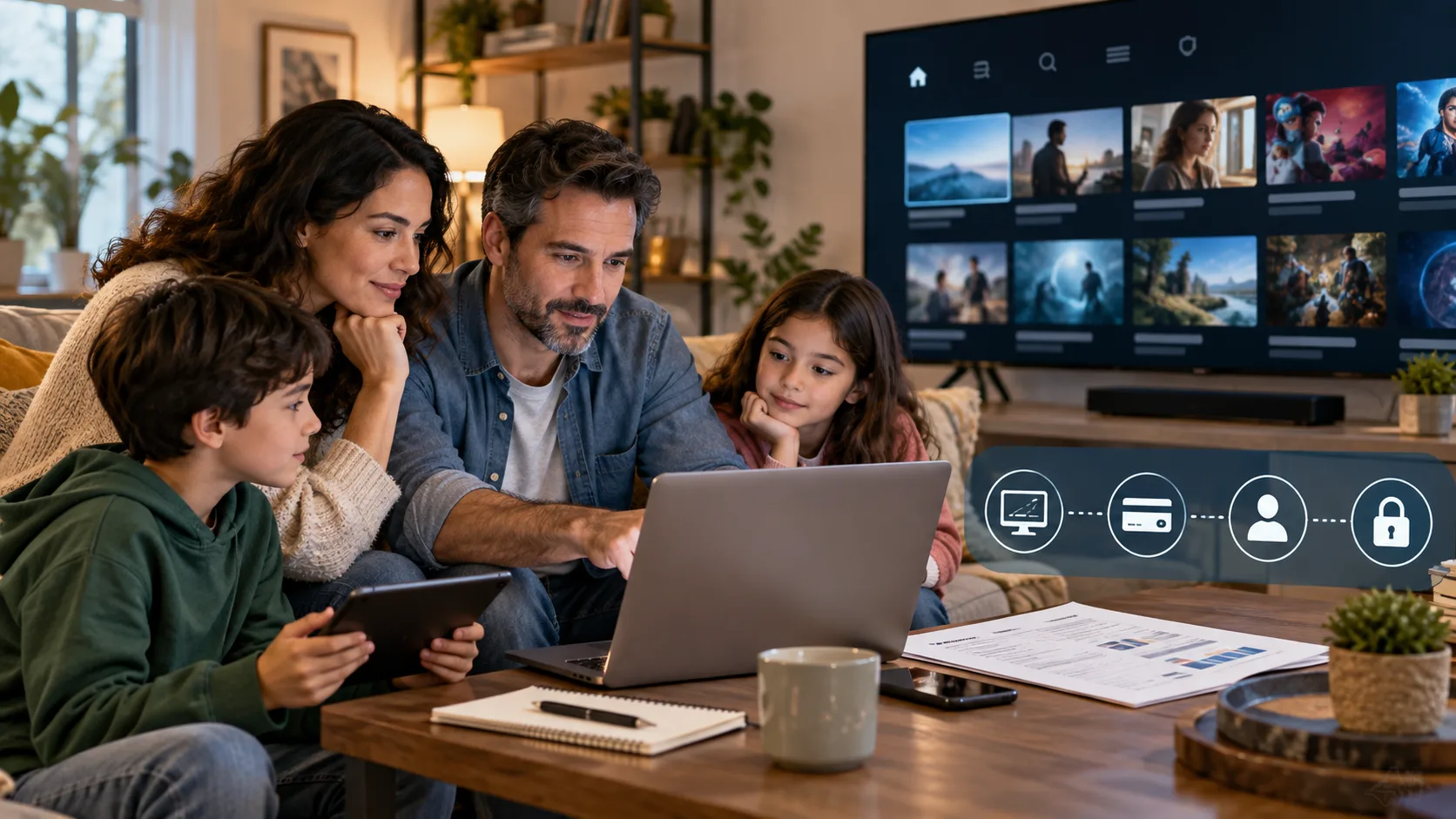
Three questions, not one subscription
Most Netflix confusion comes from treating the service as a single product when it is really three separate arrangements: what the plan includes, where the account is allowed to be used, and how billing and access behave when something changes. Plan tiers, advertising, resolution, simultaneous streams and extra-member options differ by country and are revised periodically, so a feature someone describes in another market may not exist in yours.
The household rule is the part most often misunderstood, because it is a technical definition tied to devices and a primary location, with defined procedures for travel and for moving, rather than a slogan about sharing. The sections below cover comparing plans as they exist in your market, how the household definition actually works, and the billing, cancellation and account-security questions that follow.
Comparing plans in your own market
Plan names, prices and features can change by country. Compare advertising, simultaneous streams, resolution, downloads and extra-member options rather than assuming a familiar tier still exists. High resolution also depends on the title, device, internet connection and display; paying for a maximum does not make every program 4K. Taxes and third-party billing can alter the amount. Review the next billing date inside the account and treat promotional mobile or carrier bundles as separate contracts with their own end conditions.
Netflix defines a household around devices at the main place the account is used and provides procedures for travel or moving. Sharing rules are not simply a moral slogan; they are current service terms and can differ with account features. Follow the on-screen verification process rather than buying unofficial access. A profile stores preferences inside an account but is not an independent subscription. When someone leaves, profile transfer may preserve history if the feature is available and enabled.
How the household definition works
Phishing messages claim a payment failed, a prize is waiting or an account will close. Do not use the embedded link. Open Netflix directly and check membership and billing. Netflix says it will not ask for payment through a third-party site in an unsolicited message. Use a unique password, sign out unfamiliar devices and secure the email account that can reset access. Never send a sign-in or verification code to someone offering a discounted slot.
Canceling stops future billing under the current terms but normally does not create a prorated refund for unused days; access continues through the paid period. Subscriptions billed by Apple, Google, a cable company or mobile carrier may need cancellation through that provider. Removing the app is not cancellation. Gift-card balances and holds follow separate rules. Save the cancellation confirmation, then check the next statement rather than assuming the process succeeded because the screen closed.
Billing, cancellation and keeping the account secure
Cancelling stops future charges under the current terms; it does not usually create a refund for unused days, and access generally continues to the end of the paid period. Where a subscription was purchased through an app store, a mobile carrier or a bundled service rather than directly, it has to be cancelled through that provider — a common reason people believe they cancelled and then see another charge.
Account takeover attempts almost always arrive as a message about billing: a payment failed, a subscription is about to lapse, a refund is waiting. The defence is procedural rather than clever. Never act on the link in the message; open the service directly and check the membership and billing pages there. A genuine billing problem will be visible in the account, and a message that exists only in your inbox is a message about somebody else’s intentions.
Review the active devices and profiles periodically and sign out of sessions you do not recognize, then change the password — signing out alone does not stop someone who still has the credentials. Where the service offers a second factor or a sign-in alert, both are worth enabling on an account that holds a payment method.