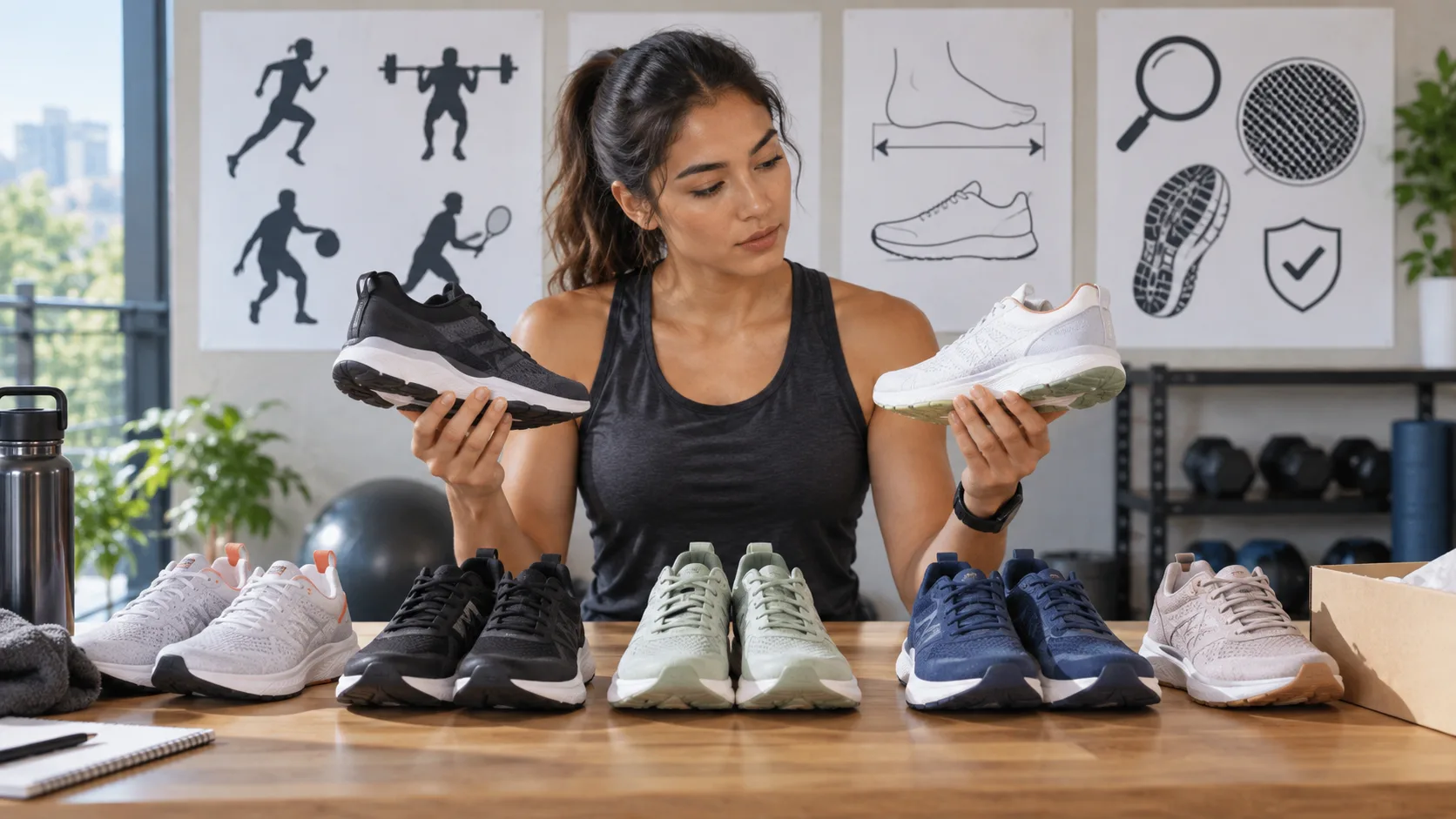
Start from the surface, then the fit
Sports footwear is specified for a surface before it is specified for a foot. Firm-ground studs, artificial-ground patterns, indoor flats and trail outsoles are engineered for particular traction, and using one on the wrong surface reduces grip, accelerates wear and, on studded boots, transfers load to the knee and ankle in ways the design did not intend. Choosing the surface first eliminates most of a catalogue in one step.
Fit comes second, and it is a measurement rather than a memory. Size charts convert foot length to regional labels, but the shape of the last, the upper material and the category all shift how a given number actually fits. The sections below cover sizing and construction, authenticity and where to buy, and what to confirm before customization or a limited release makes an order final.
Sizing, lasts and construction by sport
Adidas size charts convert foot length to regional labels, but fit varies with last, upper and category. Measure both feet, wear the intended sock and read model-specific fit guidance. Football boots, running shoes, court footwear and casual sneakers use different shapes and traction. A unisex conversion can differ from familiar men’s or women’s numbering. Try footwear on a clean indoor surface while returnable, and do not assume a painful pressure point will disappear with ordinary wear.
Choose outsole and construction for the surface. Firm-ground studs, artificial-ground patterns and indoor soles are not interchangeable; inappropriate traction can reduce control or increase stress. A lightweight racing shoe is not automatically the best daily trainer. Product pages describe intended use but cannot diagnose biomechanics or injury. Introduce unfamiliar footwear gradually. Persistent pain, swelling or numbness calls for professional advice instead of repeated size experiments driven by customer ratings.
Authenticity, authorized sellers and returns
Limited collaborations create counterfeit and resale risk. Prefer Adidas and authorized retailers, verify the exact article number and keep the receipt. Packaging, tags and stitching can support a review but no single social-media checklist proves authenticity. Marketplace authentication programs have defined scopes and error risk. Be wary of urgency, off-platform communication and irreversible payment. A seller with only stock photographs should provide its own clear images and a written condition description.
Returns differ by country, product and customization. Personalized jerseys, final-sale items and hype products may have special rules. Read the official policy tied to the order and retain tracking. For apparel, keep hygiene liners and tags until fit is confirmed. Wash only after deciding to keep the item, following its care label. If a product is defective rather than unwanted, document the issue and ask about warranty handling; do not conceal wear or select an inaccurate return reason.
Customization, limited releases and kit sizing
Personalization changes a purchase from a stock item into a made-to-order one, and with it the return rights. A jersey printed with a name and number, or a shoe finished to a specification, is typically excluded from ordinary returns, so the size decision has to be made before the order rather than after the parcel arrives. Where a size is uncertain, ordering the plain item first and personalizing later is slower but reversible.
Replica kit is sized differently from the on-pitch version, which is cut closer and made from different fabric; the same nominal size can fit noticeably differently between the two. Youth sizing follows its own chart entirely. For anything worn over padding or base layers, measure the chest over what will actually be underneath.
Limited collaborations attract both resale premiums and counterfeits. The reliable checks are the article number printed on the box label and inside the shoe, the seller’s standing, and whether the price makes sense for a product in current supply. A discount well below the market on a scarce release is a claim about the seller, not about the shoe.