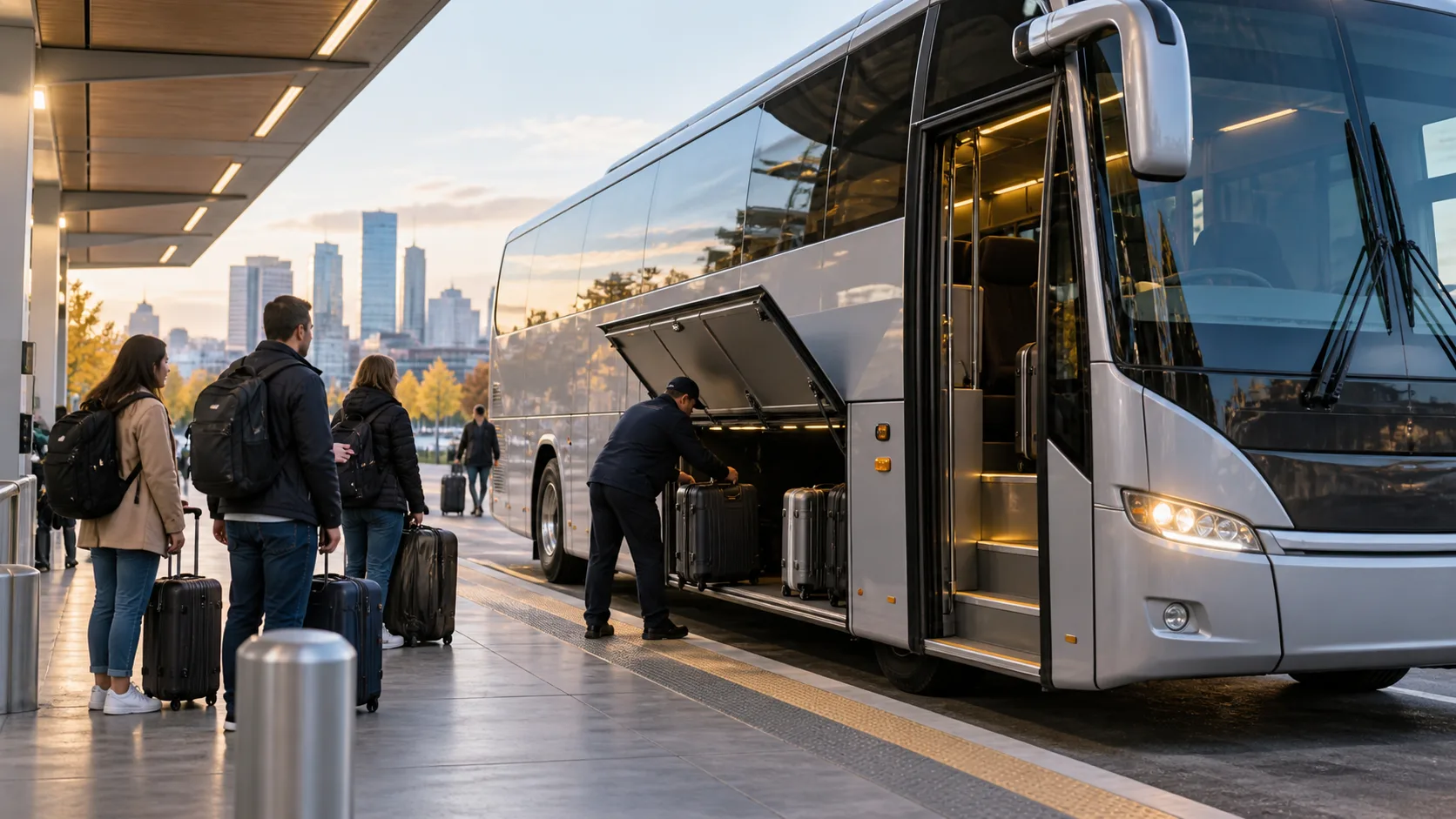
The stop is the hard part
Intercity buses fail travellers at the curb more often than on the road. Many services use a marked bay on a street rather than a staffed terminal, the bay can be on either side of a road with the same name, and there is frequently nobody to ask. A stop that is a dot on a booking confirmation deserves the same attention as the departure time: open the operator’s own directions, identify a fixed landmark, and know which direction the bus will be facing.
The second thing worth deciding in advance is how much slack the itinerary carries. Bus schedules absorb traffic, and a cheap connection with twenty minutes between two separately booked services is a plan that depends on nothing going wrong. The sections below cover finding and using the stop, comparing itineraries by their transfers rather than their duration, and the baggage and safety rules that differ from air travel.
Finding the stop and reading the schedule
Curbside intercity stops may be a marked bay rather than a staffed terminal. Open the operator’s directions, note a landmark and arrive with time to find the correct side of the street. A map pin can be slightly displaced, and two carriers may use nearby but different curbs. Screenshot the boarding instructions and route number for offline use. For local transit, check whether contactless payment, a mobile ticket or exact fare is accepted before the vehicle arrives.
Compare scheduled duration with transfers and recovery options. A very cheap itinerary with a short self-transfer can fail if the first bus is late and the second ticket is unprotected. Check whether the connection is sold as one itinerary, whether luggage is transferred and how often another bus runs. Overnight journeys save a hotel only if the arrival time, sleep conditions and station access are workable. Include travel to the stop and from the final stop in the decision.
Baggage, transfers and safety on board
Baggage size, quantity, tags, liability and prohibited items vary. Keep identification, medication, money, chargers and essential documents in a small bag under personal control. Photograph checked luggage and retain the claim tag. Musical instruments, bicycles and mobility devices may require advance arrangements. Do not assume airline dimensions apply. At intermediate stops, confirm whether passengers must remove bags or reboard the same vehicle, and never leave valuables unattended on a seat.
The Federal Motor Carrier Safety Administration offers consumer resources for interstate bus travel and carrier safety. Wear the seat belt when provided, follow driver instructions and know the emergency exits. At an unfamiliar late-night stop, wait in a lit populated area and use official transportation onward. If the operator changes, verify the company name and vehicle details in the itinerary rather than boarding solely because a driver calls the destination.
Travelling comfortably over long distances
On a long service, seat position is worth choosing deliberately. Seats over the axle ride more firmly, the rear is closest to the washroom and its traffic, and the front offers the smoothest ride and the fastest exit at intermediate stops. Where seats are assigned at booking, that choice costs nothing; where boarding is first-come, arriving fifteen minutes early buys it.
Assume the on-board amenities may not work. Power outlets and wireless are advertised as features and delivered as best-effort, so a charged power bank, a downloaded book or playlist and a bottle of water make the difference between a tolerable six hours and a long one. Temperature on coaches tends to run cold regardless of the weather outside; a layer is more useful than a blanket.
Treat rest stops as scheduled and brief. Note the departure time the driver announces, keep valuables and documents on your person rather than in the overhead rack, and take a photograph of the vehicle number if there are several coaches in the same bay. The bag stowed in the hold should contain nothing you would need if the coach and its passengers were separated for an hour.