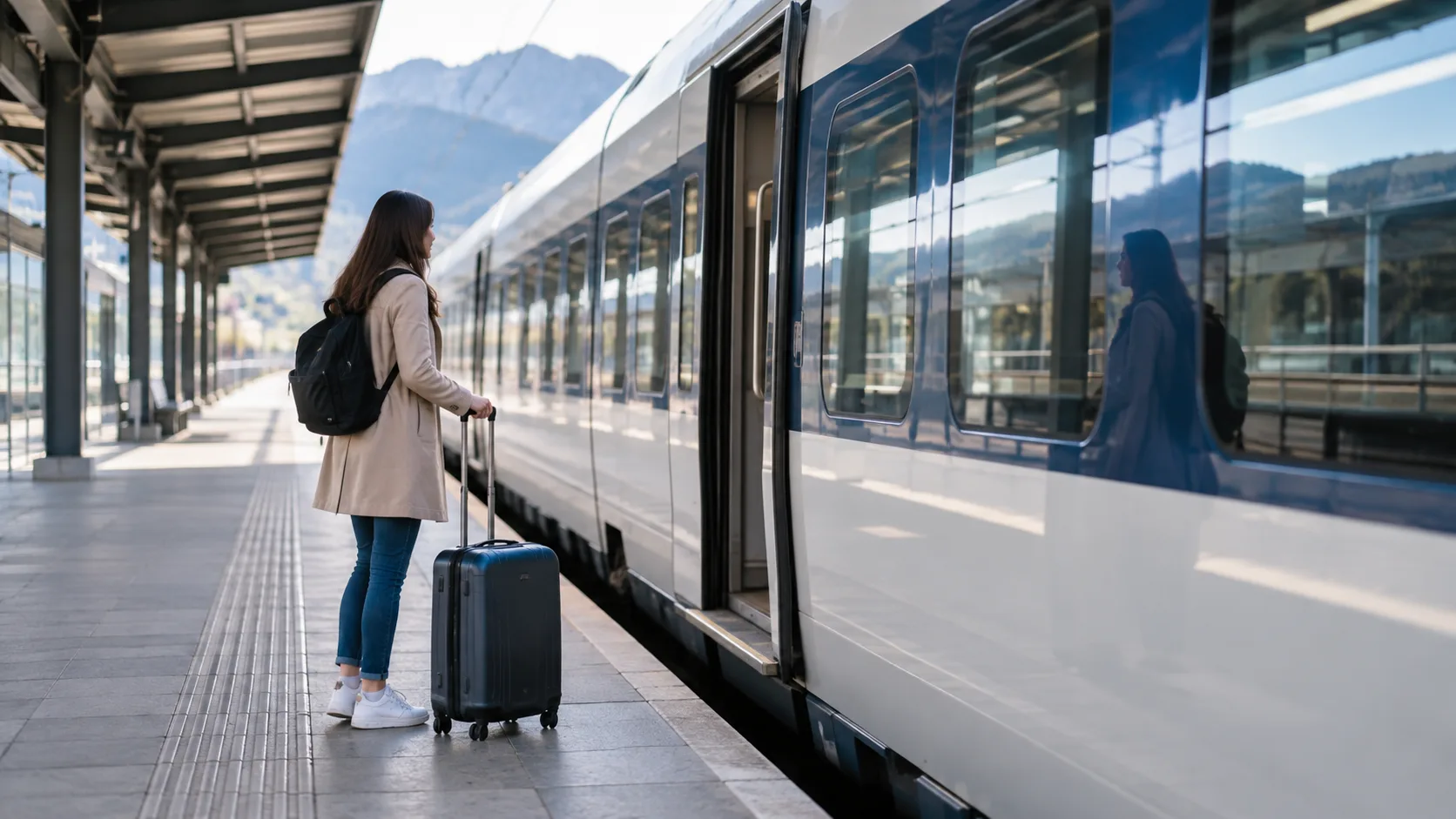
Get the station right first
More rail journeys are ruined by the wrong station than by the wrong train. Large cities routinely have several terminals with similar names, an airport rail station may sit outside the terminal building, and a suburban stop can share a name with a main-line one several miles away. Confirming the station code and the specific address, before the ticket is bought, prevents the failure that no amount of early arrival can fix.
Fares are the second area where rail behaves differently from air travel. Products can be flexible, refundable or restricted at different prices for the same seat, and a pass may still require a compulsory reservation on the trains you want. The sections below cover stations and platform access, how fares and reservations fit together, and baggage rules that vary by railway rather than by industry convention.
Stations, platform access and fare types
Cities frequently have several stations with similar names, and an airport station may not be inside the terminal. Verify the address, station code and platform-access instructions. Some smaller stops are unstaffed or have short platforms; some major terminals use gate announcements close to departure. Arrive early when collecting a ticket, checking a bag or requesting assistance. Download the ticket and itinerary because underground platforms and rural stations may have weak mobile service.
Rail fares can be dynamic and may separate flexible, refundable and restricted products. A pass does not always include mandatory reservations or premium services. Read change and refund conditions before paying, including the deadline and seller responsible. When an itinerary crosses operators or borders, confirm whether one ticket protects the connection. If tickets are separate, allow time to find a new platform and understand what happens if the first train is late.
Baggage rules and managing connections
Baggage rules differ from airlines and among railways. Amtrak, for example, publishes separate allowances for personal, carry-on and checked items, and checked baggage is not available at every station or on every route. Label bags and keep essentials with you. Large bicycles, sports equipment and pets can need reservations or route-specific handling. Lift the bag yourself only if safe; ask the operator in advance about mobility assistance and accessible boarding.
On the day, follow the operating railway rather than a generic map for live platform and disruption information. Keep a reasonable transfer margin, especially at an unfamiliar terminal. If service is canceled, document the notice and ask the seller about rebooking, accommodation and refunds under its current terms. Night arrivals deserve an onward plan because local transit may finish before a delayed train reaches the station.
Making the platform on time
Platform assignment is often published only shortly before departure, and at large stations the walk from the concourse to a distant platform can take longer than the notice given. Arriving with fifteen minutes in hand at an unfamiliar station is not caution; it is the amount of time the process actually requires. Where a station has a separate gateline for a particular operator or for international services, that check-in has its own cutoff, which can be well before departure.
Position yourself along the platform rather than at its entrance. Coach layouts are usually indicated by markers or on a display, and a reserved seat in the front coach of a long train is a two-hundred-metre walk from the wrong end once the doors open. On services that split en route, the coach you board determines the destination — the single most consequential detail on the platform and the one most easily missed.
For a connection, judge the margin by the station rather than the clock. A cross-platform change at a small station can be made in four minutes; the same interval at a large terminus with a gateline, a different level and a busy concourse cannot. Where a journey is booked as one contract, a missed connection caused by a late first train is generally the railway’s problem to solve; where the legs were bought separately, it is yours.