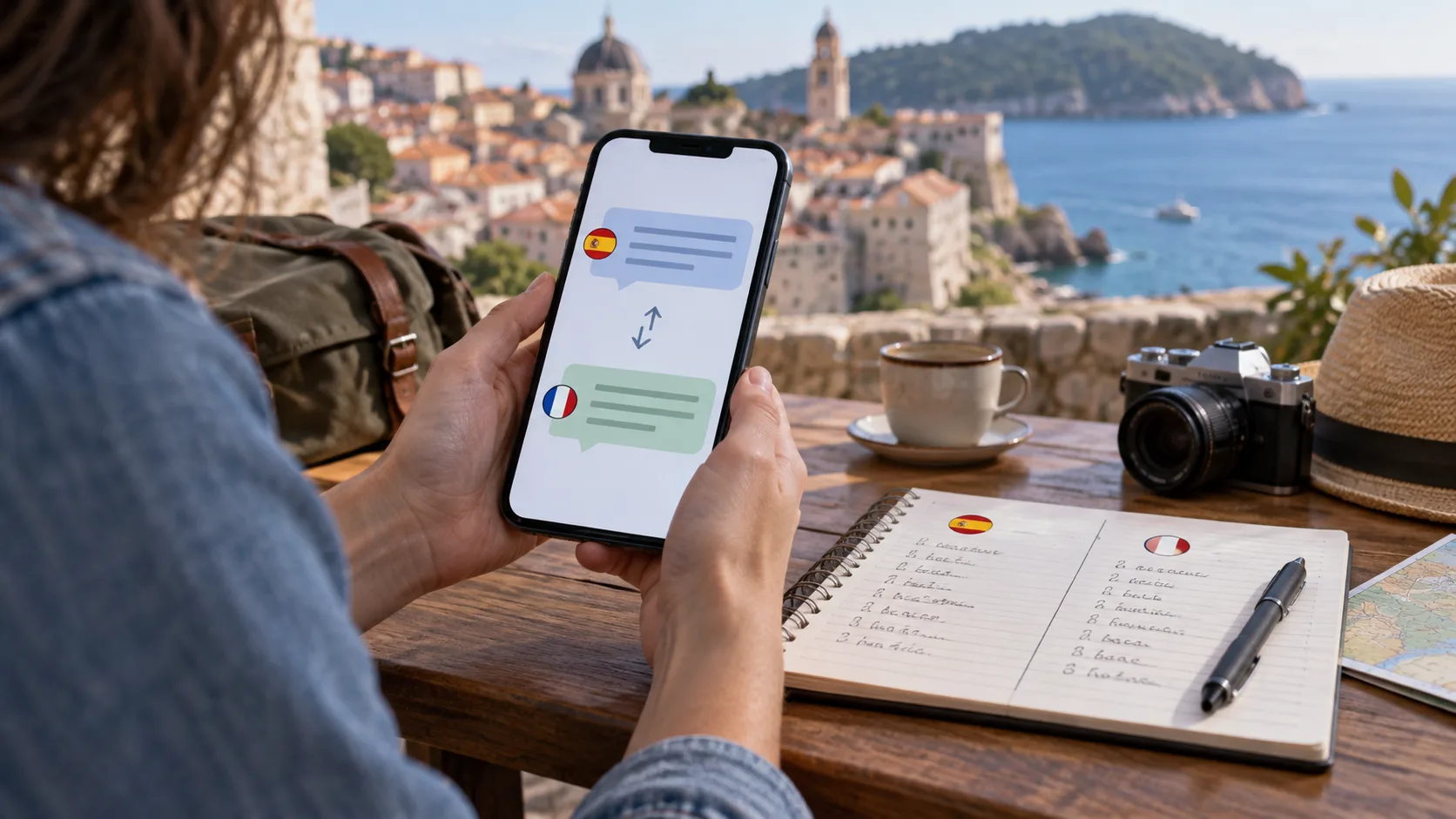
Define the task before choosing the tool
A search for “translate” can mean opening a familiar service, solving a one-time problem or learning a durable reference skill. This guide focuses on using digital translation for everyday text. Start by writing the question in one sentence and noting what decision the answer will support. A quick personal choice may tolerate uncertainty; a contract, diagnosis, safety instruction or public claim requires qualified review and primary evidence. A tool can organize information efficiently, but it does not inherit authority merely because its output looks polished.
Gather the inputs before pressing a button: language direction, subject, audience and whether the text has legal, medical or financial consequences. Preserve the original text, address or document so the result can be compared later. If the task concerns another person, confirm permission before uploading private material. Prefer official applications and secure connections, and review what an account saves to history. For time-sensitive work, record when the information was checked. Reference work becomes reproducible when another reader can see the same inputs, source and version.
Read the output as a proposal
Automated results compress many decisions into a convenient screen. Translation chooses among meanings; search ranks candidates; maps generalize terrain and calculate routes; document software interprets encoded structure. None of those operations removes ambiguity. Read the output once for usefulness and again for failure. Ask what might be missing, which assumption is invisible and how the result would change with a different date, language, travel mode or source. Apply this specifically to translate.
Pay special attention to names, numbers, negation, idioms and culturally specific references. Open underlying links rather than relying on snippets. On maps, compare instructions with posted signs and actual conditions. In translation, read the complete sentence and surrounding passage rather than correcting isolated words. In a PDF, check the cover, revision notice, headers and page labels. When the answer matters, compare at least two independent routes to it: another authoritative source, a knowledgeable speaker, a second map or the publisher’s current webpage.
Verification is part of the task
A credible source is close to the fact it describes and clear about responsibility. Government agencies, standards bodies, original research, official timetables and document publishers are often better starting points than reposts. That does not make every official page infallible; it makes provenance easier to inspect. Check dates, jurisdiction, definitions and corrections. Distinguish an estimate from an observation and a default from a requirement. Apply this specifically to translate.
Keep a short verification trail. Save the useful URL, page title, access date and relevant page number or section. Quote sparingly and preserve enough context to avoid changing meaning. If the source is unavailable to the audience, explain the limitation and look for an accessible alternative. Screenshots can document what appeared at a moment, but they are harder to search, may omit updates and should not replace a link to the underlying source. Apply this specifically to translate.
Privacy, accessibility and offline resilience
Convenience features may request location, microphone, camera, contacts or file access. Grant only what the current task needs and remove permission afterward when appropriate. Avoid uploading confidential records to a consumer tool unless its terms and the organization’s rules permit it. Download offline language or map data before travel, carry the written destination and keep enough battery to contact help. Technology should add redundancy, not become a single point of failure. Apply this specifically to translate.
Make the result usable by other people. Use descriptive link text, selectable text, headings, tagged documents and sufficient contrast. Provide alternative text for meaningful images and do not encode essential instructions only in color. For multilingual material, identify the language and writing direction correctly. If a scanned PDF has no text layer, seek an accessible edition or apply OCR and manually verify critical passages, especially numbers and names. Apply this specifically to translate.
A dependable reference habit
Use a five-step loop: define, collect, generate, verify and record. Define the decision; collect complete inputs; generate a candidate result; verify against authoritative evidence; record enough provenance to repeat the work. Stop when further searching is unlikely to change the decision, not merely when the first answer feels plausible. If sources disagree, report the disagreement rather than averaging it away. Apply this specifically to translate.
The best use of translate combines speed with judgment. Let the tool handle retrieval, formatting or a first pass, then spend human attention on context, stakes and consequences. That approach is slower than copying the first result but far faster than repairing a bad route, mistranslated instruction or obsolete document. A reference is valuable not because it ends inquiry, but because it gives inquiry a transparent, checkable foundation.