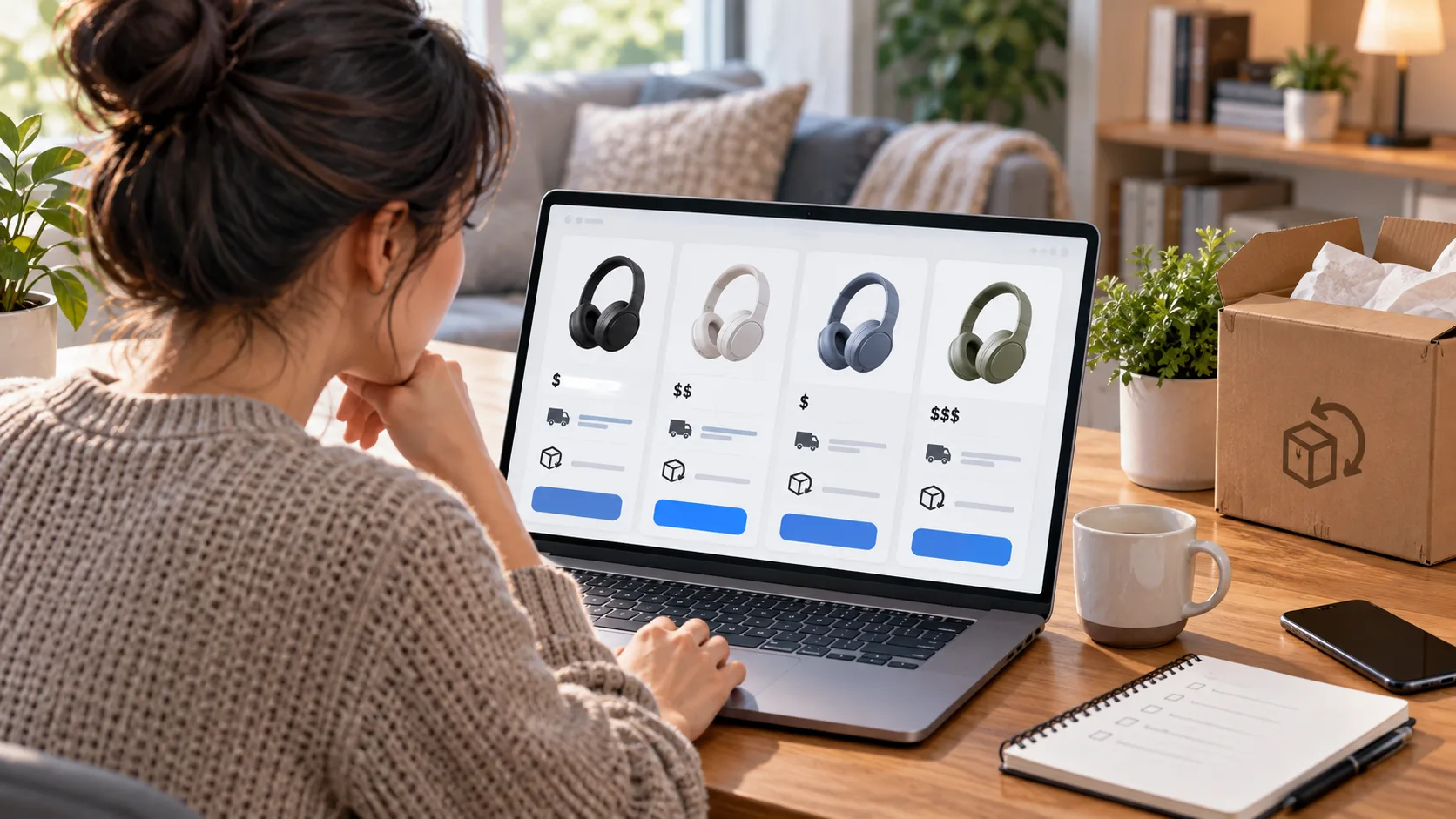
A results page is not a store
Product results on a search page combine paid placement, free merchant listings and organic results, and the arrangement is not a quality ranking. More importantly, the search engine is not the seller: the merchant behind the listing controls payment, fulfillment, warranty and returns unless a separate guarantee explicitly says otherwise. The interface is uniform; the businesses behind it are not.
That gap is where most problems begin — a card that shows an attractive price for a model number slightly different from the one you wanted, from a merchant you have not evaluated. The sections below cover reading listings and sponsorship labels, judging the merchant, and using price history and personalization controls without treating either as a forecast.
Reading listings, labels and merchant information
Search cards can be ads, free listings or organic results, and placement is not a quality ranking. Look for sponsorship labels and compare the exact model, size, condition and quantity. A price may omit shipping until the destination is known or reflect a coupon with conditions. Local inventory can lag a store system. Record the manufacturer model number and search it directly; visually similar products may have different capacities, warranties or regional compatibility.
Google displays merchant information and may offer price tracking, but the seller controls payment, fulfillment and returns unless a separate guarantee explicitly applies. Inspect the destination domain and legal business details. Search the seller independently, read recent complaints and confirm a working support path. A padlock means the connection is encrypted, not that the merchant is honest. Avoid checkout that abruptly moves to messaging, gift cards, bank transfer or cryptocurrency.
Price history, alerts and personalization
Price history and alerts are aids, not forecasts. A displayed reduction can compare with a recent or suggested price that does not reflect ordinary street price. Compare at least several established sellers and include shipping, tax, accessories and membership requirements. Waiting has a cost when an item is genuinely needed, while urgency banners can manufacture pressure. Set a target based on total value and stop tracking after purchase rather than turning ordinary volatility into a game.
Personalized results can use account activity and location. Review ad personalization, Web & App Activity and location controls according to the convenience desired. A private window limits some local history but does not make a transaction anonymous to the merchant, payment network or internet provider. Do not upload identity documents or card images into a shopping chat. Preserve the merchant confirmation, listing and policy because a search result can update or disappear after checkout.
Deciding whether to wait
A price-tracking chart records what a listing displayed, not what the item is worth, and a reduction can be measured against a recommended or briefly held higher price rather than the ordinary street price. Comparing several merchants for the identical model number, in the same condition and market, is a better measure of whether a price is genuinely low than any single chart of one seller’s history.
Timing is easier to judge from product cycles than from countdown timers. Categories with annual releases tend to discount the outgoing model when the successor is announced; seasonal goods discount after the season, not during it. A limited-time message inside a listing is a marketing instrument and carries no information about either cycle.
Before buying from an unfamiliar merchant, spend a minute on the things that determine recourse: a real address and a working contact route, a stated return window with who pays return shipping, and a payment method that offers a chargeback. A saving that depends on the order arriving perfectly is not a saving; it is an uninsured bet on a stranger.