Start with a testable question
The trend query “flow” opens a large subject. This article takes a scientific angle: fluid motion. A useful investigation begins by stating what is being measured or explained and what evidence could change the conclusion. Define terms before collecting numbers. Similar words may describe different quantities, and a precise-looking result can be meaningless when its unit, time window or population is unclear.
Identify the working variables: speed, pressure, viscosity, density and geometry. Record assumptions, instruments, software versions and selection rules before looking for a preferred pattern. That record limits hindsight and lets another person understand what happened. It also reveals when the available observation cannot answer the original question. Science advances by narrowing uncertainty, not by making every result sound final.
Mechanism before headline
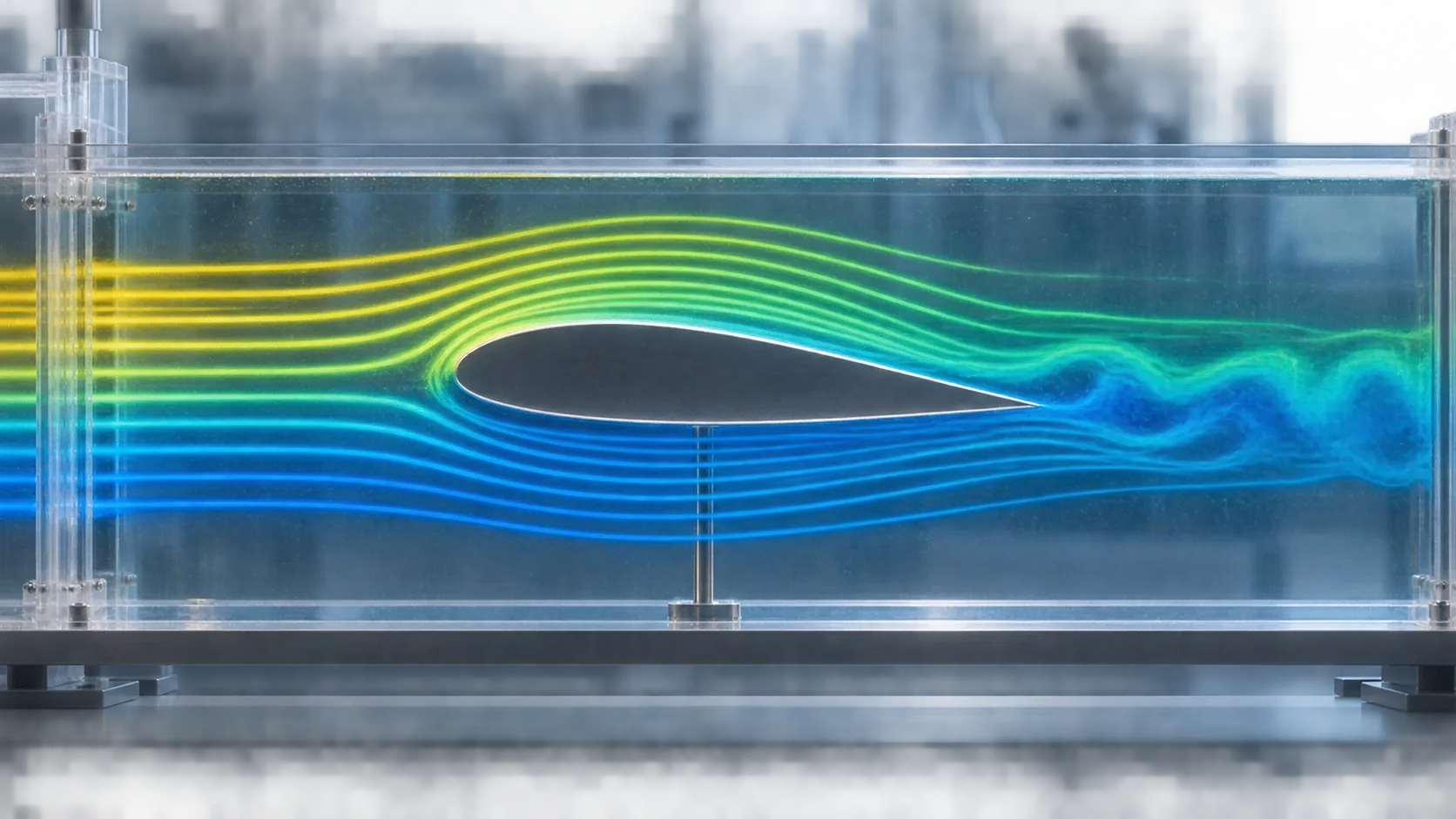
Reynolds number helps describe when inertial or viscous effects dominate. Mechanistic explanations connect observations through models, but a model is a simplified representation, not the world itself. Ask where its assumptions hold and where they fail. Laboratory control can isolate a factor while reducing realism; field observations add realism while allowing more confounding influences. Both can be valuable when their limits are explicit.
Separate measurement from interpretation. A sensor reading, code output, search result, video frame or lottery draw is an observation produced by a system. Calibration, missing data, rounding, selection and processing affect what reaches the screen. Keep raw inputs when possible and document transformations. If a result depends on one unusual data point, analyze why rather than silently removing it. Apply this specifically to flow.
Evaluate evidence in layers
Begin with primary documentation and responsible institutions, then use reviews to understand how individual findings fit together. Check methods, sample size, comparison group, uncertainty and whether the analysis was planned. A correlation can motivate investigation but does not establish cause. Replication by independent teams is more persuasive than repetition of the same claim across sites. Apply this specifically to flow.
Dates matter. Software, forecasts and AI systems change; scientific understanding can change too. A current official page may be best for an operational feature, while a peer-reviewed paper may be best for a measured effect. Report disagreement honestly. Do not average incompatible estimates merely to create a tidy answer, and do not imply consensus from one expert quotation. Apply this specifically to flow.
Reproduce, stress-test and communicate
Try to reproduce the result with the stated inputs. For computation, pin code and dependencies, add tests and preserve random seeds where relevant. For a forecast, compare successive updates and observed outcomes. For a media claim, locate the original context. Change reasonable assumptions and see whether the conclusion survives. Robust conclusions should not disappear because of a harmless formatting choice. Apply this specifically to flow.
Communicate magnitude as well as direction. Give units, denominators, uncertainty and a comparison a reader can evaluate. Explain what is known, estimated and unknown. Visuals should label axes and avoid distorted scales. AI-generated imagery must be disclosed and never offered as experimental evidence. When safety, health or money is involved, direct readers to qualified professional or official guidance. Apply this specifically to flow.
A practical science habit
Use a repeatable loop: question, predict, observe, analyze, challenge and revise. Save enough provenance for someone else to repeat the work. Invite criticism of the method rather than treating skepticism as hostility. Correct errors visibly. A transparent update strengthens a useful explanation; pretending certainty weakens it. Apply this specifically to flow.
For flow, the durable lesson is that tools accelerate reasoning only when evidence remains inspectable. Curiosity supplies the question, measurement constrains the answer, and revision keeps the explanation connected to reality. That combination turns a trending term into scientific literacy rather than another unsupported claim.
Uncertainty and ethics
Every measurement has limits. Random variation can shrink with more well-chosen observations, while systematic bias can remain even in a very large dataset. Report ranges or confidence measures when the method supports them, and avoid extra decimal places that imply nonexistent precision. Negative or inconclusive results also carry information: they can rule out a large effect, reveal a weak instrument or identify a better next question. Apply this specifically to flow.
Ethics begins before publication. Protect personal data, obtain required consent, credit other people’s work and disclose financial or professional conflicts. Do not convert exploratory analysis into a claim supposedly predicted in advance. When an experiment could harm people, animals or the environment, formal oversight and specialist judgment matter more than speed or novelty. Publish limitations beside the result so readers can judge appropriate uses, and distinguish a teaching demonstration from evidence intended to support a consequential real-world decision. Apply this specifically to flow.