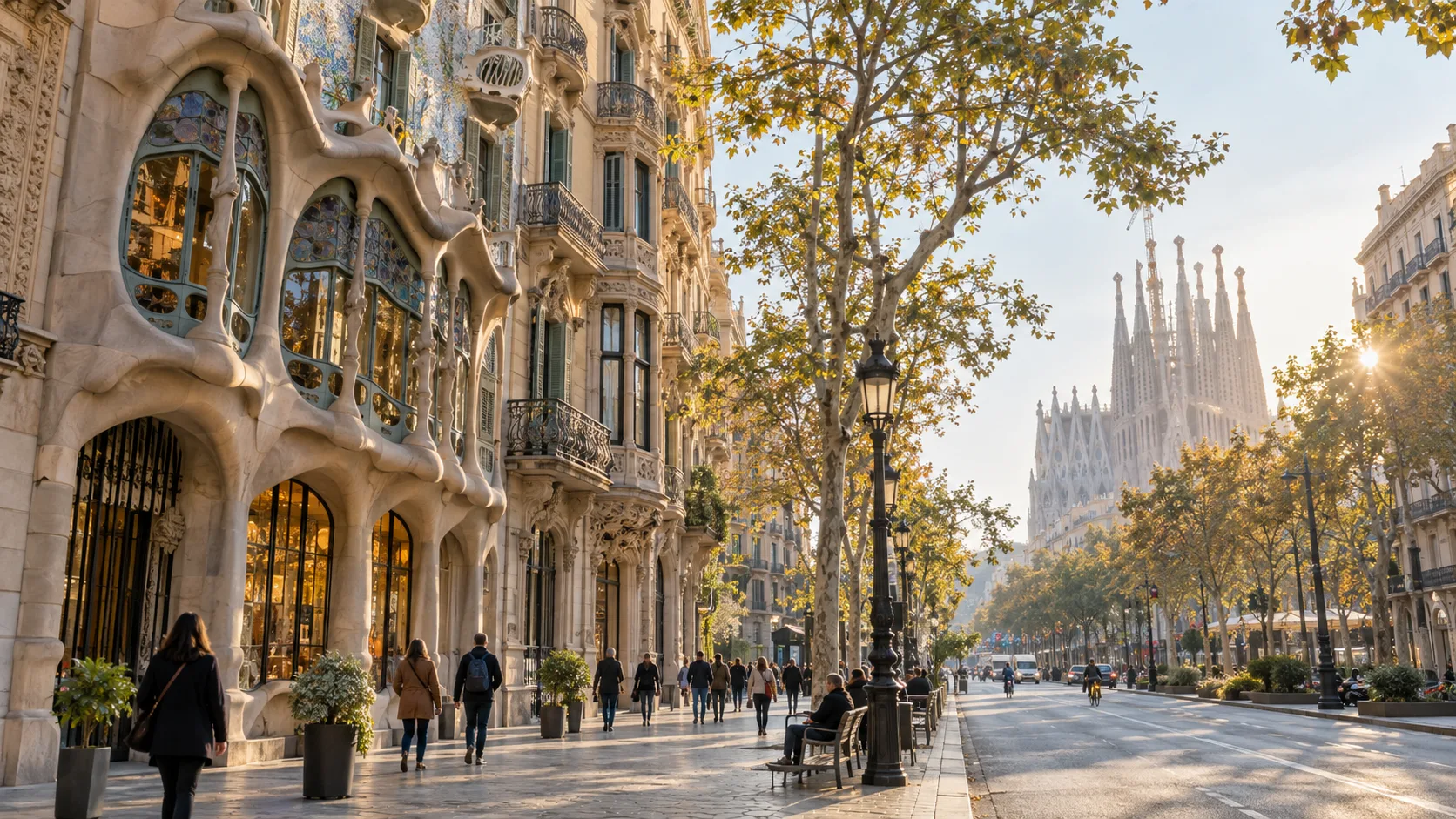
Pick the neighborhood before the hotel
Barcelona rewards a decision made early: which part of the city you sleep in. The Gothic Quarter is dense, atmospheric and noisy well into the night. Eixample is a grid of wide blocks with easy transit and a calmer evening. Gràcia feels like a separate town with squares and local restaurants. Poblenou reaches the beach, and the area near Sants trades character for the main rail station. These are genuinely different holidays booked at similar prices.
The second decision is transport, because the metro, buses, trams and regional trains overlap and their ticket products do not all cover the same journeys — the airport link in particular follows its own rules. The sections below cover choosing an area, buying the right ticket, booking the timed-entry sites that cannot be visited spontaneously, and visiting a city that lives with a great deal of tourism.
Choosing an area and using the transport network
The Gothic Quarter, Eixample, Gràcia, Poblenou and areas near Sants offer different street patterns and transport tradeoffs. A central pin can mean nightlife noise or a pedestrian lane difficult for taxis. Check the route from the arrival station and the walk after dark. Tourist apartments must comply with local rules, and Barcelona has been changing its approach to short-term rentals. Use a lawful listing and understand the effect that accommodation choices can have on residential housing.
The metro, buses, trams and regional trains cover most visitor routes. Ticket products and airport validity differ, so consult the operating authority for current zones and conditions rather than an old blog. Contactless bank-card acceptance is not universal across every mode. Validate the ticket as required and keep it through the journey. For airport travel, distinguish the metro, commuter rail, express bus and taxi by terminal, operating hours, transfers and luggage needs.
Timed-entry sites, tickets and staying alert in crowds
Sagrada Família, Park Güell and other high-demand sites use timed admission. Buy through official sites and check which entrance, tower, age or accessibility conditions apply. A reseller’s voucher may require exchange before entry. Heat and crowds make a slower route more comfortable; carry water, seek shade and protect skin. Churches and residential streets call for ordinary respect. Beaches are public spaces, not secure storage, so take only what can remain under direct control.
Pickpocketing risk is widely discussed around crowded transit and attractions. Use a closed bag in front, avoid displaying a wallet during ticket confusion and keep one backup payment method separate. Do not let fear dominate the trip: situational habits are more useful than stereotypes. Learn basic greetings, follow quiet-hours rules, avoid blocking doorways for photographs and choose locally owned businesses beyond the most congested corridors. Respect makes the city more legible.
Visiting a city that lives with tourism
Barcelona has an unusually direct relationship with the volume of visitors it receives, and the difference between a welcome guest and an irritating one is mostly about noise and space. Residential streets in the old city carry sound upward; conversations at two in the morning arrive in bedrooms. Shirts on in the street away from the beach, quiet in stairwells and courtyards, and keeping to one side of narrow pavements cover most of what local frustration is actually about.
Meal times run later than many visitors expect, and a restaurant with a full dining room at ten in the evening is normal rather than remarkable. Places serving continuously through the afternoon in the most-visited squares are generally trading on location; walking a few streets inland from any major sight changes both the price and the cooking. A greeting in Catalan or Spanish before switching to English is a small courtesy that is noticed.
For the well-known sites, book the specific time slot well ahead through the official channel and check which entrance, tower or age conditions the ticket covers; several of them cannot absorb walk-ups at all in high season. Leaving one part of each day unbooked is what makes the city enjoyable, since its best hours tend to be the unplanned ones in a neighborhood square rather than in a queue.