Airport security before September 11, 2001
U.S. airports had screening before 9/11, but airlines were responsible for it and generally hired private contractors. Passengers walked through metal detectors and carry-on bags went through X-ray machines. In many airports, non-ticketed family members and friends could pass the checkpoint to meet or say goodbye to travelers at the gate. Photo identification practices were less uniform, cockpit doors were less fortified and some small knives were permitted.
The system had evolved in response to decades of hijackings and bombings, yet it was designed around different assumptions about a hijacker’s goals. The September 11 attacks demonstrated catastrophic gaps in those assumptions. The federal government grounded U.S. air traffic, tightened cockpit and passenger rules and reconsidered who should run screening.
The creation of TSA and the layered system
Congress passed the Aviation and Transportation Security Act on November 19, 2001. It created the Transportation Security Administration, initially within the Department of Transportation. TSA took over civil-aviation security responsibilities from the Federal Aviation Administration in February 2002 and later became part of the Department of Homeland Security. Federal screeners replaced the private workforce model at passenger checkpoints.
Later attempted attacks produced familiar layers. Shoe screening followed the 2001 shoe-bomb attempt. The 2006 transatlantic liquid-bomb plot led to the 3-1-1 liquids rule: containers of 3.4 ounces or less in one quart-size bag for ordinary carry-on liquids. Full-body imaging, explosives detection, behavior and intelligence programs, hardened cockpit doors, checked-bag screening and expanded watch-list matching all became parts of a system that no longer relies on a single barrier.
What is changing again
New scanners and identity systems are gradually reducing some visible friction. In 2025, TSA ended routine shoe removal for standard passengers at U.S. checkpoints, while retaining the ability to require additional screening. Computed-tomography bag scanners can produce rotatable 3D images and may allow some airports to keep more items inside bags. Rules can still vary by equipment and security conditions, so follow instructions at the lane in front of you.
A 2026 pilot called Gateside by TSA PreCheck has also reopened limited secure-area access to approved non-travelers at participating airports. It is not a return to unrestricted pre-9/11 access. Applicants use Login.gov, apply in advance and undergo the same security screening. The contrast is instructive: modern systems can selectively restore convenience because identity and screening layers are stronger.
Orlando airport security reservations
Orlando International Airport offers MCO Reserve, a free program that lets eligible travelers without TSA PreCheck or CLEAR+ book a checkpoint time. For Terminals A and B, reservations are generally available from 5 a.m. to 5 p.m. for later eligible flights. Not every flight or time qualifies, and a reservation does not eliminate screening. It provides a scheduled lane entry that can make a peak travel period more predictable.
Book only through the airport’s official MCO Reserve page, verify the terminal and arrive within the stated window. Each traveler in a party must be covered by the reservation rules. If appointments are full, use the ordinary checkpoint; paying an unofficial seller will not create legitimate access.
Indianapolis and Cleveland wait times
Security waits at Indianapolis International Airport and Cleveland Hopkins International Airport change hour by hour. Third-party apps can be useful, but they may infer a wait from user reports or historical patterns. The airports’ own websites, airline alerts and TSA’s MyTSA tools are better starting points. A displayed 10-minute wait is not a promise: parking, bag drop and walking to the checkpoint add time.
For a domestic flight, many airlines and airports recommend arriving about two hours early, with more time for holidays, checked bags, mobility assistance or an unfamiliar terminal. Look at the airport’s live guidance on the travel day rather than an article published days earlier. Early-morning Monday, Friday afternoon and holiday peaks can behave very differently from the daily average.
Can you bring food through airport security?
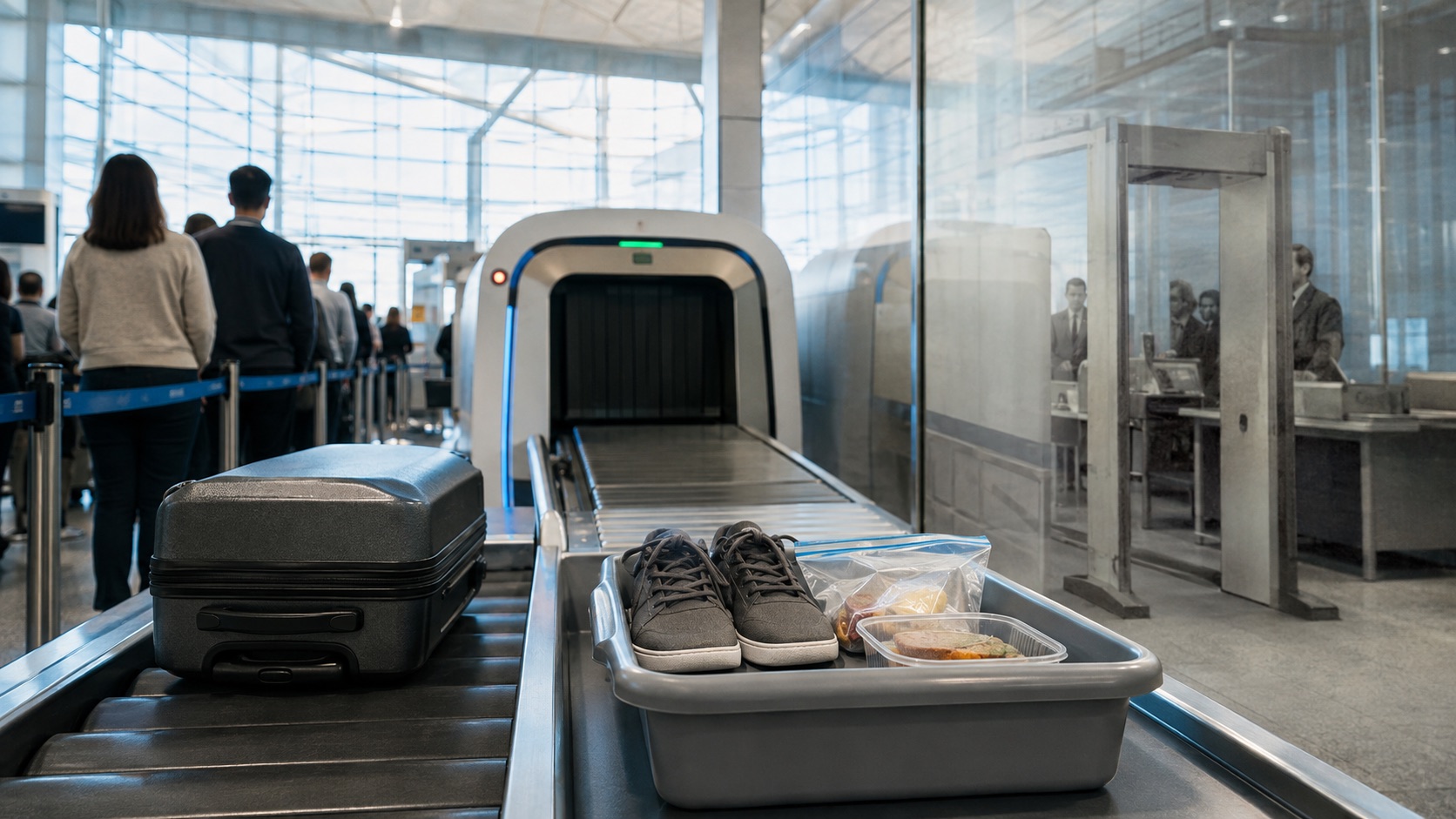
Solid food is generally allowed in carry-on and checked bags. Sandwiches, baked goods, fruit and dry snacks can usually pass through screening, though agriculture restrictions may apply at a destination. Liquid or gel foods larger than 3.4 ounces—such as soup, yogurt, sauces and spreadable items—normally belong in checked baggage unless an exemption applies. Ice packs must be completely frozen at screening to avoid being treated as liquids.
Pack food where it can be removed easily, because dense items may obstruct the X-ray image. Formula, breast milk and medically necessary liquids have special procedures and can exceed the ordinary limit; tell the officer at the start. The final decision rests with TSA at the checkpoint. When in doubt, search the exact item in TSA’s official “What Can I Bring?” list before leaving home.